…
The Expat's Guide to Japan
Everything you need to know about living and working in Tokyo & Yokohama
More results...
Blog Archives
Shirakawa-go and Gokayama
This village is famous for its houses with traditionally thatched roofs and its renowned rearing of silkworms. Together with the surrounding mountains and fields, it creates a truly beautiful landscape. Due to the notorious winter snowfalls, this community was occasionally…
Sacred Sites in the Kii Mountain Range
The three sacred mountain ranges Yoshino/Omine, Kumano Sanzan and Koyasan and the connecting pilgrimage path have had an immensely important effect on Japanese religious and cultural growth and exchange. This is a place famous as the origin of the special…
Historic Monuments of Ancient Nara
In Nara, which had been the Japanese capital from 710 to 784, before this moved to Kyoto, you can feel the long lasting effect that religion had, and still has, on the city in the form of Buddhist temples and…
Buddhist Monuments in the Horyuji Area
The Horyuji Temple (法隆寺), which was completed in the year 607, is known as the world’s oldest remaining wooden structure. It was also Japan’s first ever designated World Heritage Site and during the time following its construction had a profound…
Historic Monuments of Ancient Kyoto
The ancient monuments of Kyoto are world famous and one of Japan’s most beloved sightseeing spots. The Kiyomizu Temple (清水寺) as well as Kinkakuji (金閣寺, golden pavilion) in Kyoto City, Byodoin (平等院) in Uji City and the Enryaku Temple (比叡山延暦寺)…
Himeji Castle
Representative of early 17th century Japanese castle architecture, Himeji Castle (姫路城) is regarded as one of Japan’s most impressive wooden structures. The beautiful white stucco walls make the building not only beautiful to look at, but also act at as…
Iwami Ginzan Silver Mine
With a history of about 400 years in mining, this is Japan’s most well known silver mine. It is estimated that 30% of the silver that was in circulation during the 100 years between the middle of the 16th and…
Yakushima
Covering an area of roughly 500km2 and a circular circumference of 130km, Yakushima (屋久島) is an impressive granite based island. Despite being a comparatively small island, it has an abundance of mountains over 1,000m, and a climate that ranges from…
Gusuku Sites and the Ryukyu Kingdom
Located mainly in the southern part of Okinawa’s main island are the remains of 9 Ryukyu Kingdom castles. The native word “Gusuku” can be translated directly as “castle”. The Ryuku Kingdom (琉球王国) was established in 1429 and remained an independent…
Sapporo White Illumination
Along with the Sapporo Snow Festival, this artistic light display has become a well known reminder of winter. Now in its 46th year, the festival grew from one location and 1,000 light bulbs to become known throughout the country. Objects…
Hachinohe Emburi
This festival is carried out in hope of a successful harvest. Dancers wearing hats representing horse head carry out a very unique and stylized dance, in which they wave their heads back and forth, while singing traditional rice farming songs.…
Aomori Nebuta
At this festival, giant models of warriors and lantern decorated floats are taken through the city among powerful shouts. One of the many theories about the origin of the festival is that it is based on the “Tanabata” festival, during which…
Akita Kanto Festival
This festival originated from the ancient tradition of fending off the evil spirits of the summer, in hope of better health and crops. Participants parade through the streets with giant bamboo sticks to which an uncountable number of paper lanterns…
Yamagata Hanagasa Festival
This parade centers around floats, lavishly decorated with flower arrangements, and the accompanying dancers, dancing to Hanagasa Ondo folk songs, with their trademark red flower hats in hand. Over the three days of the festival, more than 1 million spectators…
Sukagawa Taimatsu Akashi
Counted as one of the three largest fire festivals in Japan, this powerful and magnificent festival lights up the late fall season. Started to mourn the lost soldiers of Sukagawa Castle, which fell over 400 years ago, the festival consists…
Vegan Food in Tokyo

For those of us who are vegetarian or vegan inclined, the prospect of finding anything to eat in Tokyo can be particularly daunting. In a country where is ubiquitous and where the concept of vegetarianism is still relatively unfamiliar, never…
Trip to Eastern Akita (1) – Misato Town
Situated one hour from Akita Airport by car, a trip to , with its expanse of fields and green mountains that stretch out as far as the eye can see, is enough to release anyone from the oppression of the…
Sannō Festival
This is one of the three major Edo festivals (江戸三大祭). This historic festival centers around Hie Shrine (日枝神社), the patron shrine of a wide area of central Tokyo which includes the Tokyo Imperial Palace compounds, and is meant to express…
Big Float Festival of Sawara
Sawara no Taisai (佐原の大祭, The Big Float Festival in Sawara) is a traditional festival that dates back more than 300 years. The festival takes place twice a year, once in July in the Honjuku area (the east side of the…
Kawagoe Festival
The Kawagoe Festival (川越まつり) is a brilliant, gorgeous festival that takes place in what is often referred to as “Koedo” (小江戸), or Little-Edo, a town known for its many, well preserved, old fashioned Japanese ware-houses and businesses from several centuries…
Torinoichi
Torinoichi (酉の市) is the religious festival of Otori Shrine that takes place every year on the Day of the Rooster (酉の日, Tori no hi) in November. The festival flourished around the Kanto area during the Edo Period, with the celebration…
Chichibu Yomatsuri
This festival, with a history of over 300 years is designated as part of Japan’s “Important Intangible Folk Cultural Properties”. On the 2nd and 3rd, cars and floats decorated with paper lanterns parade the city. Some of these have performance…
Takayama Festival
This festival takes place in spring and autumn. Several hundreds of people dress up in traditional Japanese attire and dance and parade through town to old Shinto songs led by lion dancers. Designated as one of Japan’s “Important Intangible Folk…
Hamamatsu Festival
This festival celebrates the birth of the first son in the last year. With more than 1 million visitors, it ranges as one of the largest festivals in Japan. During the day, there are a number of kite flying competitions…
Kakegawa Festival
The fall festival in Kakegawa (掛川祭) is famous for its performances, “yatai” floats, and lion dance. The Grand Festival takes place only once every three years, the next being in 2012, with performers from each town dancing in procession. The…
Paul Rusch Festival Yatsugatake County Fair
This American-style Thanksgiving Festival is a rarity in Japan. Named after Dr. Paul Rusch, a Kentucky native who, focusing on the area around Yatsugatake Nanroku, devoted his life to helping rebuild Japan and introduce democracy after the war, this festival…
Aoi Festival
The origins of Aoi Matsuri (葵祭) can be traced back to the noble circles of the Imperial court. Among the many Japanese festivals it is known as one of the finest and rarest of its kind. Especially impressive is the…
Kyoto Gion Festival
The Gion Matsuri (祇園祭) is one of Japan’s three major festivals. It was first established in the year 869 in Kyoto and then became increasingly popular throughout Japan. Its primary objective has been to worship the Gion god and by…
Otsu Festival
Originating in the early part of the Edo Period, this religious festival includes a parade of magnificent, 13 story tall lantern floats. This festival is rare for its mechanical dolls (Karakuri Ningyo) which operate on special mechanisms such as “Koi…
Shika no Tsunokiri (deer horn cutting)
For almost 330 years, the Shika no Tsunokiri has been a marker of the fall season in Nara since the Edo Period. The event was started to protect townspeople, as well as valuable cultural properties from being damaged by bucks’…
Kyoto Jidai Festival
Established in 1895 to commemorate the 1,100th anniversary of the Heian Period move of the capital, this festival takes place at Heian Shrine. What is special about this festival, is that it offers you the chance to view a large…
Kurama Fire Festival
The Kurama Fire Festival (鞍馬の火祭) takes place every year on the 22nd of October at Yuki Shrine, in Kyoto. Starting at 6pm, watch fires called Kagaribi (篝火) are ignited in front of each household in the village and, while the…
Kōchi Yosakoi Festival
At this festival the unique “Yosakoi Naruko” dance is performed to the clapping rhythm of the Naruko (a wooden percussion instrument). On the evening of the 9th, there is a big fireworks competition at the Kagamigawa riverside and the main…
Awa Odori
The Awa Odori (阿波踊り) dance is one of the three Obon dances, and is performed to accompanying shamisen, taiko and flute music. During the festival period, a wide area of the town turns into a pedestrian paradise with dance stages…
Hakata Gion Yamakasa Festival
This festival which takes place at Kushida Shrine (櫛田神社), home to the patron deity of Hakata, looks back onto a history of more than 760 years. The Yamakasa here are large floats decorated with banners and puppets, which are presented…
Hakata Dontaku
Between 10:00am and 8:00pm, at 30 different locations in the Tenjin and Hakata districts, the so-called “Dontaku-tai” dance groups will perform displays of their skills. In the afternoon, there is also a parade at the Dontaku Plaza on Meiji Dori.…
Okinawa Zento Eisa Festival
Eisa (エイサー) is a traditional Okinawan dance festival, which takes place around the Obon holidays. In 1956, when Koza City (present-day Okinawa City) was established, this event began as an Eisa dance competition. Since then it has evolved into a…
Nagasaki Kunchi
This event consists of musical performances in honor of the patron deities of the surrounding villages which are kept at Suwa Shrine. One of the main features of this festival is its international flair, including cultural imports from Holland, Portugal…
Hita Sennen Akari
The historical town of Mameda (豆田) has been registered as a national cultural asset, and every year on the second weekend of November, Hita Tenryo Festival (日田天領祭り), a festival celebrating the historical importance of the area is held. The bamboo…
Taketa Chikuraku
Taketa Chikuraku (たけた竹楽) is an illumination event that started in 2000 in Taketa City, where over half the city is covered by forested land, with a good portion of it being varieties of bamboo. Bamboo was once a valuable material,…
Geography of Japan
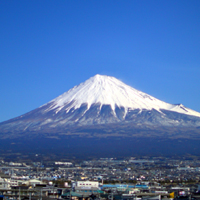
Japan is an island nation located along the east coast of the Asian continent. The Japanese archipelago is composed of four large islands (Hokkaido, Honshu, Shikoku, Kyushu—see below), the islands of Okinawa, and thousands of other smaller islands, with a…
Seasons & Climate of Japan
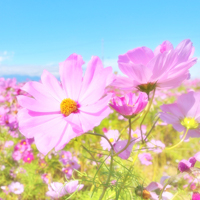
Summary Japan has 4 distinct seasons starting with a cold and dry winter. The welcome spring is mild and brings out Japan’s famous cherry blossoms. The summer starts with the rainy season in late June or early July, followed by…
The Japanese Language
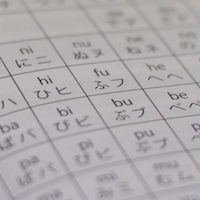
Japanese (Nihongo 日本語), spoken by around 128 million native speakers, is the national language of Japan, though not officially designated as such. The literacy rate in Japan is said to be close to 100% of the population, and the country…
The Japanese Calendar & National Holidays
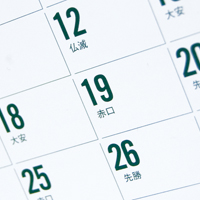
Japan Standard Time The standard time zone in Japan is Japan Standard Time (JST), which is 9 hours ahead of UTC (UTC+09:00). The 24-hour clock is widely used. Currently, daylight savings time (DST, summer time) is not observed in Japan.…
Japanese Customs & Practices
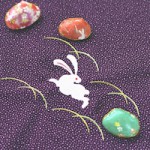
Japanese Manners Having cut itself from the rest of the world until the late 19th century, Japan has preserved many of its traditional customs, though western influences continue to grow. Many of these customs are closely linked with the changing…
Money in Japan
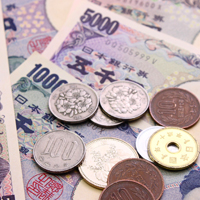
The Yen (¥ / 円 / JPY) is the official currency in Japan. Banknotes and coins The Bank of Japan issues four types of Japanese paper banknotes, and 6 different coins. The banknotes, with value denominations of ¥1,000, ¥2,000, ¥5,000,…
Measurements
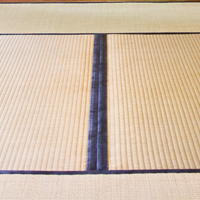
Traditional Japanese Units Although the metric system is used in Japan, some traditional units of measurement are still in wide use as well. A common unit of area used when describing room size is , which is the size of…
Power Supply
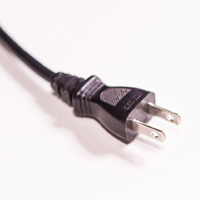
The power supply is 100V/50Hz in Eastern Japan and 100V/60Hz in Western Japan, but most electrical items can be used in both areas. Electric outlets are identical to 2-pin North American outlets, and many portable electrical devices from the U.S.…
Trains in Japan
An overview of Japan’s rail network, and general information on train fares, tickets and prepaid IC cards.


