Celebration
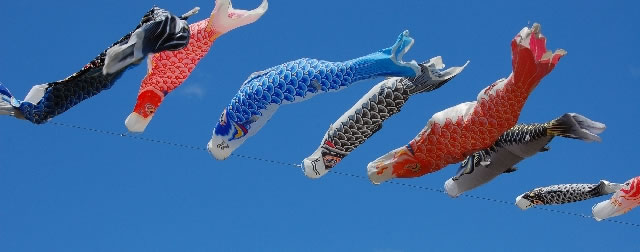
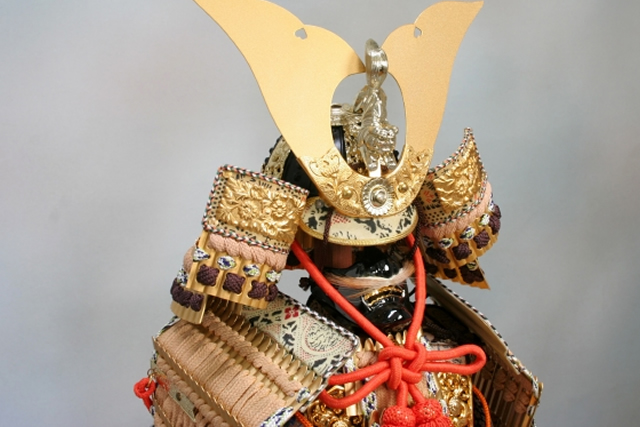
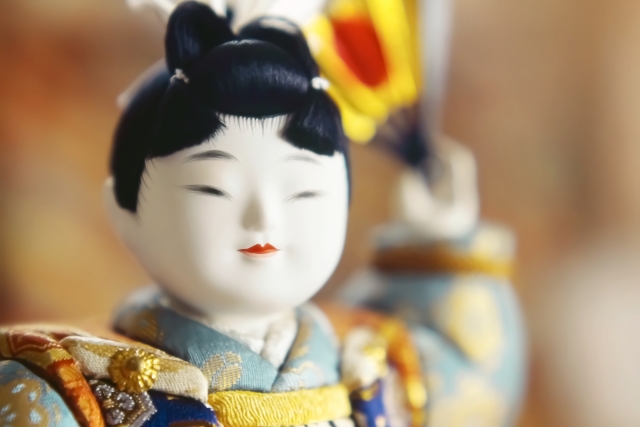
Kodomo no hi (こどもの日, Children’s Day, 5th of May), today it is a day to celebrate all children’s health and growth. “Koinobori” kites in the shape of a carp, a lucky fish symbolizing determination and success, are flown above rooftops for each child in their house. Many families also display helmet replicas so called Kabuto or samurai dolls in their homes.
Foods to prepare for Children’s Day
*柏餅: Kashiwa-mochi
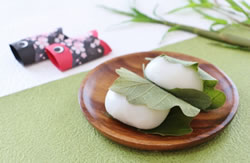
Kashiwa-mochi is a traditional Japanese sweet made of soft rice cake filled with sweet azuki bean paste, wrapped in an oak leaf.
The leaf itself is not eaten, but adds a subtle seasonal fragrance. Oak leaves do not shed until new shoots appear, symbolising the continuity of family lineage. For this reason, kashiwa-mochi is closely associated with Children’s Day.
The leaf itself is not eaten, but adds a subtle seasonal fragrance. Oak leaves do not shed until new shoots appear, symbolising the continuity of family lineage. For this reason, kashiwa-mochi is closely associated with Children’s Day.
*ちまき:Chimaki
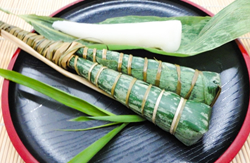
Chimaki is a steamed dumpling made of glutinous rice wrapped in bamboo leaves, traditionally eaten in western Japan on Children’s Day. The bamboo leaf gives the rice a subtle, earthy aroma and is part of what makes chimaki such a distinctive seasonal treat. While the filling and shape can vary by region, chimaki has been enjoyed as a festive food for centuries, carrying wishes for good health and growth.
Customs of Children’s Day
*鯉のぼり:Koinobori Kites (Carp-shaped kites)
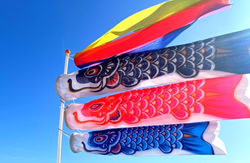
Carp streamers, known as koinobori, are flown outside homes throughout Japan in the lead-up to Children’s Day. The carp is considered a lucky symbol of strength, courage and perseverance, believed to have the power to swim upstream and even climb waterfalls. Families traditionally fly one streamer for each child in the household, expressing their hopes for their children to grow up strong and resilient.
*菖蒲湯:Shobu-yu

Shobu-yu is a traditional bath infused with iris roots and leaves, enjoyed on Children’s Day. The warm water releases a fresh, herbal fragrance that is thought to improve circulation and promote wellbeing. It is also believed to ward off negative energy and illness. The practice has been observed in Japan for centuries and remains a simple, meaningful way to mark the arrival of early summer.


