From ancient wrestling rituals to marathon relay races and packed baseball stadiums, here is your guide to the sports culture of your new home.
Sport here is not just entertainment. It is culture, discipline, community, and, sometimes, a kind of national religion. Here is what is worth knowing, and watching, as you settle into life in Japan.
Table of Contents
Baseball
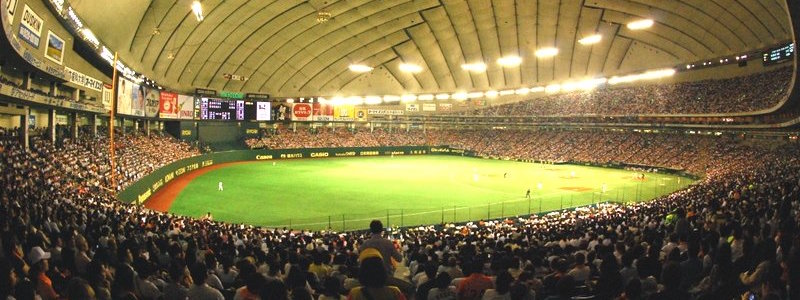
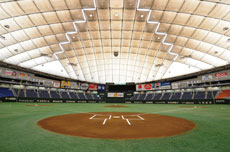 Baseball arrived in Japan in the 1870s, brought by American teachers and missionaries, and it has never left. It is now, by most measures, the most popular sport in the country, with a cultural presence that reaches into everything from television scheduling to convenience store snack packaging.
The NPB (Nippon Professional Baseball) league consists of 12 teams divided into the Central League and the Pacific League, with the regular season running from late March through October. The league has produced some of the greatest players in the history of the sport, including Ichiro Suzuki, Hideki Matsui, and Shohei Ohtani, many of whom have gone on to successful careers in Major League Baseball.
Attending a Japanese baseball game is, above all else, a joyful experience. The crowd chants are elaborate and relentless, the food is excellent, and the atmosphere is family-friendly. You will rarely feel out of place as a foreigner.
There is also a good chance that a player from your home country is currently playing in the NPB. The league has a long tradition of recruiting international talent from the United States, South Korea, Australia, and beyond. Check the rosters. You might already have a team to support.
Notable clubs include the Yomiuri Giants and Tokyo Yakult Swallows in Tokyo, the Hanshin Tigers, the Fukuoka SoftBank Hawks, and the Hiroshima Toyo Carp.
03-5800-9999 | 5 min. from Suidobashi Sta.
03-3404-8999 | 5 min. from Gaiemmae Sta.
045-661-1256 | 3 min. from Kannai Sta.
Soccer
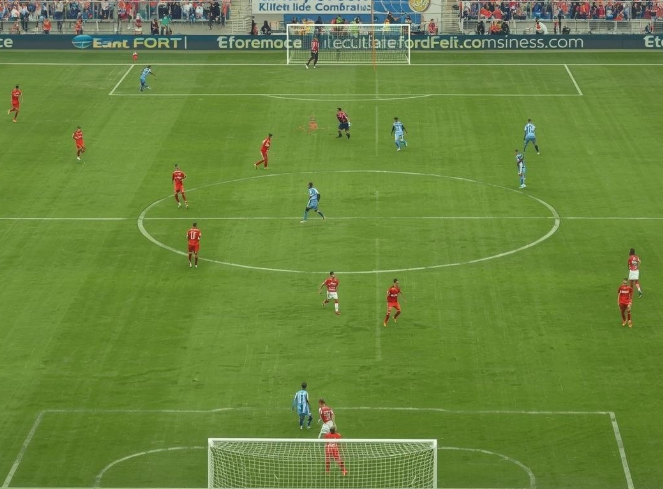 Japan’s professional football league was founded in 1993, relatively recent by the standards of most major footballing nations, but it has grown steadily into one of the strongest competitions in Asia. The quality of play has risen considerably over the past decade, reflected in the Japan national team’s performances at recent World Cups, including their memorable victories over Germany and Spain at the 2022 tournament in Qatar.
Clubs like Urawa Red Diamonds, Kashima Antlers, Gamba Osaka, and Yokohama F.Marinos have established genuine football cultures with loyal fanbases. Attending a J.League match is accessible, affordable, and, particularly if you follow football at home, a familiar pleasure in an unfamiliar country.
And again: check the rosters. The J.League has a long history of attracting international talent, with players from Brazil, Europe, South Korea, Australia, and Southeast Asia all featuring across the divisions. There may already be a reason for you to pick a team.
Sumo
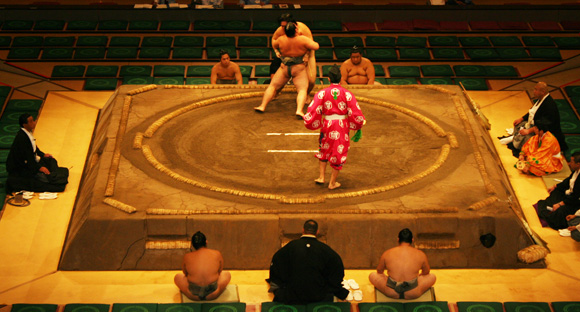 Sumo is the sport most foreigners associate with Japan, but few realise how rich and ritualistic it is until they actually see it in person. Rooted in Shinto tradition dating back over a thousand years, every match is preceded by several minutes of ceremony: wrestlers scatter salt to purify the ring, stomp the ground to drive away evil spirits, and engage in a long stare-down before finally charging at one another. The match itself may last only a few seconds, but the build-up is everything.
There are six Grand Tournaments (basho) held each year, three of which take place in Tokyo at the Ryogoku Kokugikan. Tickets are far more affordable than you might expect, and the atmosphere is genuinely memorable, particularly in the late afternoon when the top-ranked wrestlers compete.
A practical tip: same-day tickets go on sale at the venue from around 8am. Arriving early on a weekday often means you can walk in, take a cheaper seat, and enjoy the full day’s programme from start to finish.
Ekiden
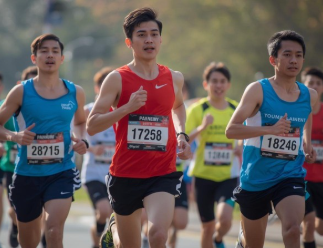 Of all Japan’s sports, ekiden is perhaps the hardest to explain to someone who has never encountered it, and the most surprising once you do.
An ekiden is a long-distance relay race in which teams pass a tasuki (a cloth sash) between runners in place of a baton. The distances are enormous, the terrain can be brutal, and the emotional investment from participants and spectators alike is unlike almost anything else in Japanese sport.
The Hakone Ekiden, held every January 2nd and 3rd, is the most famous of all. Twenty university teams race over two days along a 217-kilometre route from central Tokyo to the mountain town of Hakone and back. Tens of millions watch the broadcast. Families stand in the January cold to cheer on runners they have never met. When a runner collapses from exhaustion or is forced to hand off the tasuki before finishing their stage, the emotion is raw and deeply felt.
Ekiden captures something central to how Japan thinks about effort, sacrifice, and the relationship between the individual and the team. If you are in Japan in early January, find a television or head to a spot along the route. You will not forget it.
Martial Arts
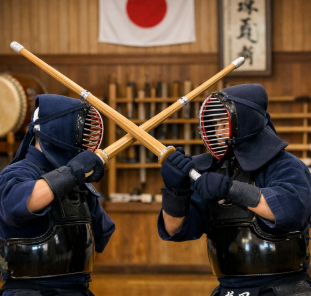 Japan’s martial arts tradition is deep, varied, and genuinely present in everyday life in a way that may surprise newcomers.
Kendo, the art of bamboo sword fencing, is taught in many Japanese schools as part of the physical education curriculum. Students in full armour, striking at each other with shinai (split bamboo swords) while shouting at the top of their lungs, is a perfectly normal sight in a school gym on a Tuesday afternoon. Judo is similarly embedded in school life, and both disciplines carry a philosophical weight that goes beyond the physical. Students are taught about respect, perseverance, and the proper way to lose gracefully as much as they are taught technique.
Karate, though it has roots in Okinawa rather than the Japanese mainland, is widely practiced and has a significant competitive presence both domestically and internationally. It was included as an Olympic sport at the Tokyo 2020 Games.
For expats, the martial arts offer something genuinely valuable: a way into Japanese community life that does not require language fluency. Local dojos are found in almost every neighbourhood, most welcome complete beginners, and the shared physical experience has a way of crossing language barriers that few other activities can match. If you have children, enrolling them in a local kendo or judo class is one of the most effective ways to help them build friendships and feel at home.
Sport as a way in
One of the fastest ways to feel at home in a new country is to find the thing that makes its people come alive.
In Japan, sport does that. Sometimes quietly, as in the meditative intensity of a kendo match, and sometimes with overwhelming, coordinated noise, as in the chanting sections of a baseball stadium. It cuts across age, background, and language in a way that little else does. You do not need to understand every rule, or know the history, or speak Japanese. You just need to show up.
Whether you spend a morning watching junior sumo wrestlers practice at a local stable, stand on a roadside in January cheering runners you have never met, or find yourself on your feet in the seventh inning singing a fight song you learned ten minutes ago, Japanese sport has a way of pulling you in.
Give it a chance. It will surprise you.


